Dark Paint in Small Rooms: Why It Works and How to Get It Right
I hear this one constantly. "I'd love a dark colour but my room is too small." It's the single biggest myth in interior design and it stops people from making the one change that would transform their space overnight.
Here's what actually happens when you paint a small room in a deep, rich colour. The walls recede. The boundaries of the room become less defined. Instead of staring at four flat, bright surfaces that remind you exactly how compact the space is, you get depth. Atmosphere. A feeling of being held by the room rather than squeezed by it.
Think about it this way. The cosiest restaurants, the best hotel bars, the rooms you walk into and immediately feel something. They're almost never white. They're dark. They're warm. They're enveloping. There's a reason for that, and it works just as well at home.
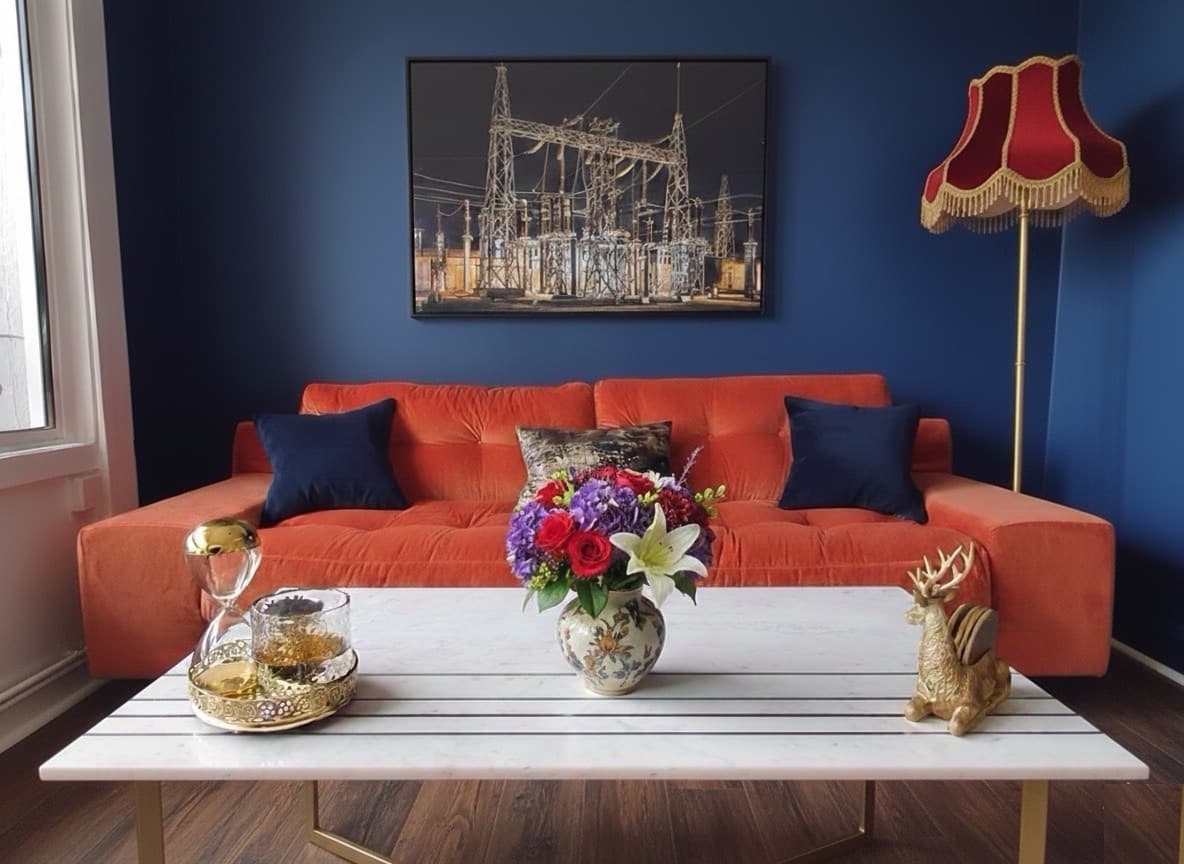
I painted a 17th-floor Battersea flat in deep navy blue. Not a big flat. Not high ceilings. An ex-council property with standard dimensions. The clients wanted bold colour and I said let's go all in. The result? The room feels twice as atmospheric as it did in magnolia. An orange velvet sofa pops against those navy walls in a way it never would against white. The whole flat feels intentional, confident, and alive.
If you want to try dark paint in a smaller room, here are the things I'd think about.
Commit to it. A single dark accent wall in a small room can actually make things feel awkward. The contrast draws attention to the room's size. Going dark on all four walls, and ideally the ceiling too, creates a cocoon effect that works far better.
Get your lighting right. Dark walls absorb more light, so you need good sources at different heights. A pendant or ceiling light, a table lamp or two, and ideally a floor lamp. Warm-toned bulbs, 2700K. This is where the magic happens. Dark walls lit by warm, layered light feel incredibly inviting.
Use it as a backdrop. Dark walls make everything in front of them sing. Art stands out. Brass catches the light. A green plant looks three times more alive against navy or forest green than it does against white. Your furniture and objects become the stars.
Don't be afraid of colour on colour. A deep teal wall with a mustard armchair. Navy walls with a burnt orange sofa. These combinations feel bold in your head but completely natural in person. Contrast is your friend.
The worst that can happen? You repaint. It's not structural. It's not permanent. But in ten years of doing this, I've never had a client ask me to go back to white.