How to Light a Victorian Terrace Without One Harsh Ceiling Light
The standard Victorian living room lighting plan is a single pendant, a bit too bright, on a switch by the door. It flattens the bay, glares on the television, and makes everyone look tired. The house is not the problem. The one-source habit is.
Think in layers, at different heights. Ambient light can still come from a chandelier or a decent flush fitting if the ceiling is low, but it should not be the only thing on. Task light is a lamp by the chair you actually sit in. Accent light is a picture light, a pair of sconces, a lamp on a console in the alcove, something that catches brass or a gilt frame.
Warm bulbs. Around 2700K. Cool white in a period room is how you get that estate-agent glare. Put as many circuits as you can on dimmers. The same chandelier that feels ceremonial at dinner should be able to drop for a Wednesday.
If you have no useful ceiling point, or you rent, you can still light the room. A floor lamp in the corner bouncing off the ceiling, table lamps either side of the sofa, a plug-in wall light. Pools of light that overlap. An average terrace living room wants three to five sources, not one.
Hallways and landings are where terraces feel poorest at night. One bulkhead on the landing, a dark run to the front door. A console lamp, a pair of sconces, a picture that is actually lit: that is how the house greets you. In the Macleane flat, the hallway only made sense once the cabinet, the brass and the light were working together. You felt the rest of the home before you saw it.
Kitchens at the rear, especially after a side return, need a different treatment again. Downlights in a grid will always feel like a shop. Pendants over the table, under-cabinet light for the worktop, and something low for the evening so you are not eating under a flood. Save the bright scene for cooking.
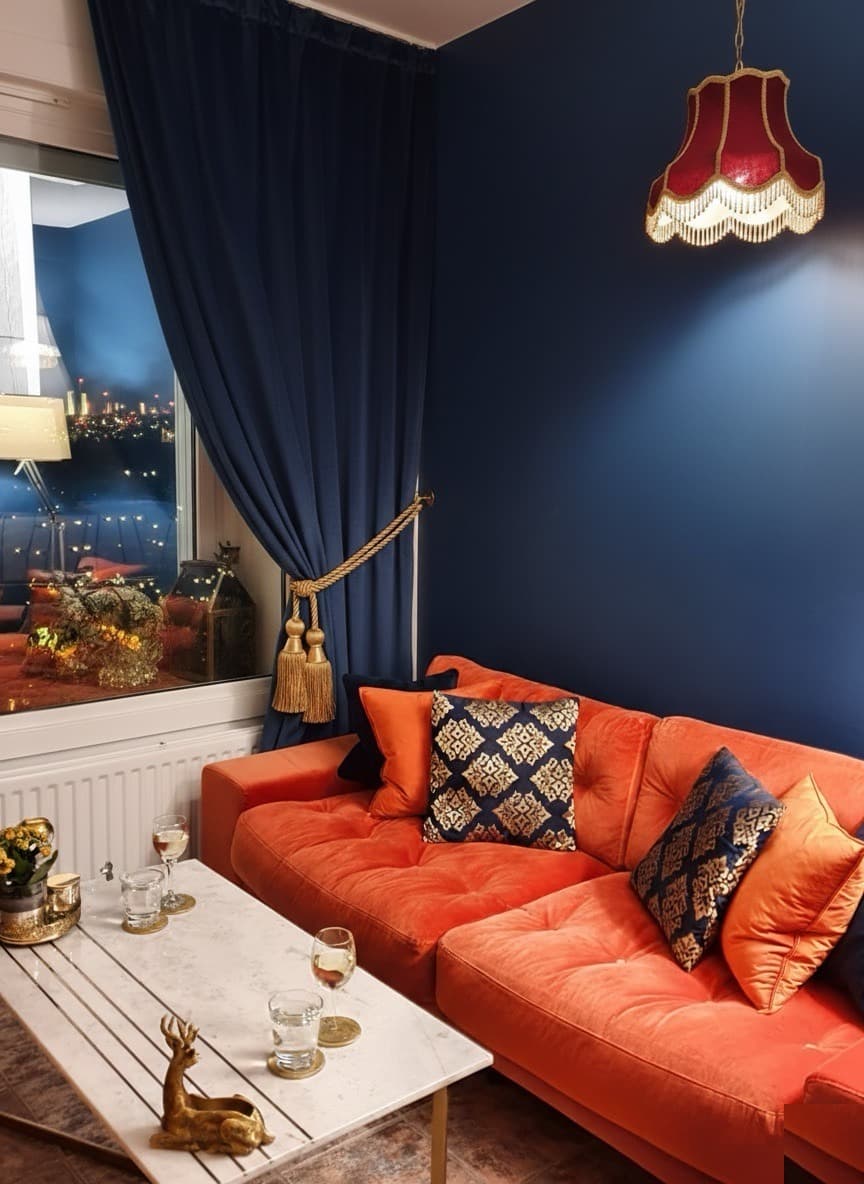
In Battersea I painted a small flat dark and then built the night around lamps and a bit of glow on the walls. The room would have failed with a single ceiling downlight. Dark colour without layered light is just a cave. Light without colour can still feel cheap. You want both.
Walk your house at 8pm with the main lights off and only lamps on. Notice where you still cannot see a face, and where you are squinting. That is the brief. I can map a lighting plan as part of a room scheme, but you can start this week with two lamps and warmer bulbs. The architecture is already interesting. Stop lighting it as if it were a corridor.